Author: Site Editor Publish Time: 2025-09-10 Origin: Site


Silt fence are temporary, permeable barriers of geo-textile installed in a trench and supported by star pickets or wooden posts.
A silt fence may be thought of as a leaky dam.
Sediment is treated in two ways:
The velocity of run-off is slowed to a point at which it no longer has sufficient energy to hold particles in suspension. This is achieved through a damming of
run-off behind the silt fence. When the run-off no longer has energy to hold particles in suspension, the particles are able to drop out of the water column by gravity. This is how the majority of sediment is removed by a silt fence.
Some filtration also occurs as run-off passes through the silt fence.
Silt fences should only be used in areas of sheet flow. They're not suitable for use in concentrated flow.
They're most effective in removing coarse particulates from run-off however they have no filtering capacity of fine or dispersive soils.
According to the USA EPA standards test results, the following percentage of fragments will be removed from well installed and maintained silt fences :
Soil type | Percentage removal |
|---|---|
| Total suspended solids | 70% |
| Sand | 80-90% |
| Silt-loam | 50-80% |
| Silt-clay-loam | 0-20% |
Silt fences are an easy and cheap measure to install for large distances, e.g. if an entire, down-slope side of a site must be protected. The use of a silt fence plough can make the job even easier.
Figure 1: Silt fence installation (source: EPA Victoria 2004, Publication 960 p.30)
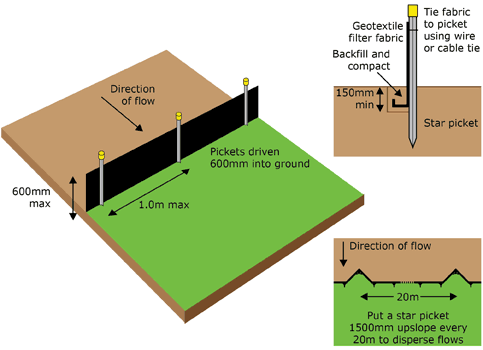
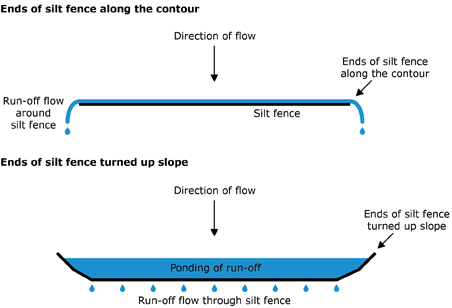
Silt fence may be reinforced with wire mesh or by placing posts every 1m where there's a risk of being knocked over by run-off flow or wind. Note: the ends must be turned up-slope to allow damming to occur.
Figure 2: Silt fence ends (source: EPA Victoria 2004, Publication 960 p.30)
According to EPA Publication 960, the maximum slope length above the fence should be no greater than:
Slope V:H | Maximum slope length (m) |
|---|---|
| 1:2 | 15 |
| 1:3 | 25 |
| 1:4 | 40 |
| 1:5 | 50 |
| Flatter than 1:5 | 60 |
Silt fences should be regularly inspected to ensure:
run-off is not passing under or around the fence (if installed properly this shouldn't be a problem)
the silt fence hasn't been knocked over as a result of runoff flows or wind
the silt fence hasn't detached from posts
no damage has occurred as a result of works on site or due to interference by members of the public
Silt fences require de-silting (removal of collected sediment) when sediment has built up to 1/3 the height of the measure, or when the built up sediment is preventing the silt fence from working effectively.
This generally requires the silt to be shovelled out from behind the fence and deposited in a stabilised area of the site away from run-off flows. It shouldn't be placed up-slope or next to the silt fence where it'll be washed straight back into the silt fence. It also shouldn't be placed down-slope of the silt fence.
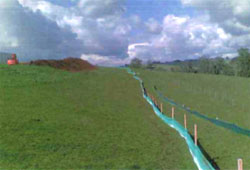
Figure 3: Silt fence (source: Statewide River and Stream Management)